
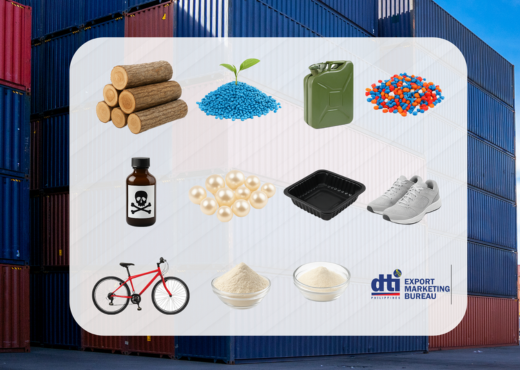
Exporters can now explore more opportunities in the neighboring state of Indonesia as the Indonesian government has eased import restrictions on 10 categories of goods.
The Department of Trade and Industry-Export Marketing Bureau (DTI-EMB) in a recent advisory said Indonesia’s Trade Ministry Regulation No. 16 of 2025 deregulates import requirements for the following products:
• Forestry products
• Subsidized fertilizers
• Fuel and energy materials
• Plastic raw materials
• Certain chemical substances
• Pearls
• Food trays
• Footwear, especially athletic shoes
• Bicycles
• Food additives
The easing of import restrictions for these 10 categories of goods aims to improve Indonesia’s business environment by simplifying rules and creating more jobs, boost competitiveness and investment, and give stronger support to local products and domestic industries.
This move is also intended to align with global trade dynamics, particularly in view of the US tariff imposition.
These items were selected for their strategic role in supporting domestic supply chains and industrial productivity.
The regulation seeks to relax imports for forestry products, including wood for industrial use and raw materials, to reduce pressure on domestic forests by providing legal and sustainable alternatives for industrial use.
The simplified import procedures for subsidized fertilizers are intended to support Indonesia’s food self-sufficiency program by cutting red tape in the fertilizer supply chain.
The category of “other fuels” is being deregulated to provide domestic industries with more competitive access to energy inputs.
Similarly, restrictions on certain chemical imports have been removed as Indonesia’s domestic chemical industry is now considered competitive enough to withstand foreign competition.
The decision to ease pearl imports used in jewelry and related industries supports local industries that use pearls as raw materials for manufacturing and export products.
The inclusion of food trays addresses current supply shortages needed for the government’s Free Nutritious Meal Program for schoolchildren.
The major deregulation of the 10 commodity groups was announced on June 30, 2025 and is scheduled to take effect by the end of August 2025.
Despite the sweeping deregulation, textile and apparel imports, including garments and accessories, will remain tightly controlled to protect domestic manufacturers.
Indonesia has also recently announced the removal of import quotas on live cattle to strengthen domestic supply, specifically for beef and cattle. The policy aims to support local farms in improving both production volume and quality, DTI-EMB said.
For 2025, Indonesia targets the importation of 250,000 cattle to meet domestic demand for both meat and dairy products.
PHILEXPORT News and Features
Published: August 22, 2025
Published: August 22, 2025
October 02, 2025